
Law Offices of Michael J. Primus

Personal & Business Bankruptcy Attorney serving San Francisco Bay Area Since 1993

  • Home
  • Offices
    • Walnut Creek Office
    • Hercules Office
    • Antioch Office
  • Bankruptcy Basics
  • Resources
    • AVVO Legal Guides
    • Common Questions Video Series
    • Real People, Real Questions, Real Answers
    • Free Credit Report
  • Blog
    • Bankruptcy
    • Credit
    • Marriage & Divorce
    • Student loans
    • Taxes
  • Contact
  • Top Rated

High Income, Still Broke? There’s help for you.

November 6, 2014 by Michael Primus

Better Days, Just Ahead Green Road Sign with Copy Room Over The Dramatic Clouds and Sky.Many families in Walnut Creek, Concord, Antioch and Brentwood have two incomes – good jobs – yet somehow there is just never enough money to make ends meet.  I am a father of two kids, so I know about braces, field trips and the clothes they like but then never wear.  No one item is that expensive but together it all adds up.  For many families, the trouble comes with just one additional expense.  It might be an expensive car repair, an unwanted dental emergency, a traffic ticket or a desperate call from a family member needing money.  It’s always something.  Does that sound familiar?  Frustrated and confused, people assume they must be doing something wrong.  Honest people turn to credit cards or payday loans to get through to the next month, and that’s the beginning of an ugly cycle of charging and paying.  Credit cards and payday loans quickly become another monthly bill.

Most people assume that having two good jobs means they will not qualify for bankruptcy.  These same people also want to protect their credit rating and assume chapter 7 bankruptcy will ruin it.  Both of these assumptions are incorrect in many cases.

High Income – The law considers a person’s or couple’s income to determine to what extent they qualify to have debts forgiven.  The formula is derived from IRS guidelines and is complicated.  Suffice it to say, a family of four with a six figure income (over $100,000 gross) will usually qualify for bankruptcy.  Surprised?  It’s true!  There are many factors such as car payments, house payments, and the cost of health insurance that directly impact qualifying for bankruptcy.  If you feel like you are in a financial hardship, chances are the law will agree.

Credit rating – Good credit is essentially the ability to get a loan if you apply for one.  Good credit is a history of paying bills on time combined with adequate monthly income to afford additional loans.  Once your payments become delinquent you no longer have good credit.  If you are burdened with large debts, you will not have good credit until the existing debts are dealt with.  Bankruptcy is not good for your credit but it does let you start over and begin building good credit.

What’s Next – How long will payday loans and credit cards hold you down?  Are you ready to get the facts about bankruptcy?

At the Law Office of Michael Primus we have helped hundreds of clients get out of debt, stop wage garnishments, and start fresh through bankruptcy.  If you live in Contra Costa County and have debt problems, contact us for a free in-office consultation.  We have offices in Walnut Creek, Antioch and Hercules.

 

Filed Under: Bankruptcy, Blog

35% of Americans With A Credit File Have a Bill in Collections

September 23, 2014 by Michael Primus


iStock_000025109861SmallYou may think most people pay their bills and live comfortably or at least get by.  The truth, according to a study conducted by the Urban Institute, is that 35% of Americans with a credit file (most people over 18 years old have a credit file) have a bill in collections.  What does that mean?  Having a bill in collections generally means the debt is more than 180 days past due.  Hard working people in Richmond, Antioch and Brentwood are no exception.  Think about it, if you do not have a bill in collections then odds are your neighbor to the right or left does.  In some cases the delinquent debt is for a medical bill that should have been paid through insurance.  In other cases the credit report mistakenly shows a collections account where no such debt exists.  Unfortunately the majority of collections are just debts that have gone unpaid, usually for good reason.

In tough financial times people focus on food and shelter, often leaving credit card and medical bills unpaid.  When the unpaid bill goes to collections an ugly downward spiral begins.  The spiral starts with phone calls and demanding letters but can move to lawsuits, wage garnishments, and even a bank levy.  Many people will turn to payday loans as a short term solution but soon find that payday loans – with interest rates often above 300% – only make things worse.  Some people will struggle for years carrying debts, always thinking things will get better.  For some people things do get better, but for many the late fees, annual fees, and high interest rates make getting out of debt impossible. Personal bankruptcy offers a fresh start for people trapped in debt.

At the Law Office of Michael Primus we have helped hundreds of clients get out of debt, stop wage garnishments, and start fresh through bankruptcy.  If you live in Contra Costa County and have debt problems, contact us for a free in-office consultation.  We have offices in Walnut Creek, Antioch and Hercules.
Filed Under: Blog, Credit

My Ex Has To Pay!

August 11, 2014 by Michael Primus

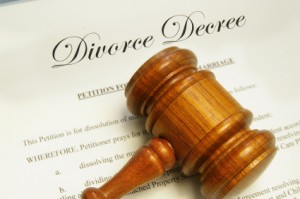
My Ex Has To Pay!  Bankruptcy Attorney Michael Primus says “A divorce decree does not  remove contractual responsibility.”  Often a divorce decree will require one spouse, let’s say the (former) husband, to repay credit cards taken in both names jointly.   What happens if he fails to pay?   The account will go to collections and both of them will be pressured to pay the bill.  Typically, the (former) wife assumes the divorce decree will protect her credit which is not the case.  Legally, the contract was between the credit card company and both of them.  The fact they are now divorced does not change the contract with the credit card company.

With a joint account, the former spouse’s share equal responsibility for the debt. The failure to pay could (and likely would) be reported to the credit bureaus thereby damaging the credit of both.  The best option may be to pay the debt in full and go back to court to enforce the divorce decree.  Doing so will minimize credit report damage.  Often paying the debt is not possible, in that case a person should consider bankruptcy.  This is a general discussion of the law and should not be relied upon.  Any person considering bankruptcy should consult a lawyer for a detailed discussion of his or her rights and options.

At the Law Office of Michael Primus, we have helped hundreds of clients get out of debt, stop wage garnishments, and start fresh through bankruptcy.  If you live in Contra Costa County and have debt problems, contact us for a free in-office consultation.  We have offices in Walnut Creek, Antioch and Hercules.



Filed Under: Blog, Marriage & Divorce

Getting Free Copies of Your Credit Reports

May 9, 2014 by Michael Primus

People in Antioch, Walnut Creek and Hercules frequently ask, “How do I know what’s on my credit reports?”  The answer is to get a free copy of your credit reports.  As soon as anyone hears “free” they immediately think what’s the catch?  I think that too.  When it comes to credit reports, the Fair Credit Reporting Act requires that consumers be given access to their credit reports once every 12 months.  The Federal Trade Commission established www.annualcreditreport.com to give consumers easy access to their credit reports, no strings attached.  To get your reports,  you’ll need internet access and will be asked several questions about your finances.  Most people get copies of their credit reports in under 10 minutes.  Unfortunately, the credit reports made available to consumers do not include the three digit FICO score generally used by auto and mortgage lenders.

Often people considering bankruptcy assume their credit reports are a mile long and all bad.  Most of the time people find their credit reports are not as bad as expected.  Usually this happens because derogatory items were never reported or were removed after 7 years.

Maybe you’re thinking, “My credit is good, so why bother?”  Regularly reviewing your credit reports can help you ensure your good credit is ready when you need it, catch signs of identity theft early, and even alert you to misapplied payments or other lender mistakes.

At the Law Office of Michael Primus, we have helped hundreds of clients get out of debt, stop wage garnishments, and start fresh through bankruptcy.  If you live in Contra Costa County and have debt problems, contact us for a free in-office consultation.  We Have offices in Walnut Creek, Antioch and Hercules.


Filed Under: Blog, Credit

Politicians Are No Help!

February 28, 2014 by Michael Primus

1404896_HiResMost people in Antioch, Brentwood, Walnut Creek and Hercules learn early in life not to expect much help from the government.  Sure, the government runs schools and maintains the roads but when an individual has a problem that person should expect little or no help from the government.  2013 saw a couple more examples of the “help” that was no help.  Let me explain.

In 2011 and 2012 mortgage interest rates hit all-time lows, making it seem that struggling homeowners finally had a chance to refinance and take advantage of the low rates.  Unfortunately, in 2011 most homeowners had no equity in their homes and for that reason were unable to take advantage of the low rates.  By 2013, home prices began to rise and so did interest rates.  That meant that just as many homeowners had enough equity to refinance their mortgages, the rates were no longer attractive.  Who controls interest rates?  The government by and through the Federal Reserve.  The individual loses out.  This is not the only example in 2013.

As property values were (finally) increasing in 2013, and the foreclosure crisis waning, the California legislature decided it was time to give homeowners some additional protection from deficiency claims after foreclosure.  Specifically, Senate Bill 426, signed into law in July 2013 and effective on January 1, 2014, strengthens California’s existing anti-deficiency statutes.  Knowing that foreclosures peaked in 2011 makes it easy to see this comes too late for most troubled homeowners.

This sounds bad, but all is not lost; if you’re a homeowner facing foreclosure, you have rights!

At the Law Office of Michael Primus, we have helped hundreds of clients get out of debt, stop wage garnishments, and start fresh through bankruptcy.  If you live in Contra Costa County and have debt problems, contact us for a free in-office consultation.  Offices in Walnut Creek, Antioch and Hercules.

Filed Under: Blog

Bankruptcy Appeals – When The Judge Makes A Mistake

January 23, 2014 by Michael Primus

GavelWe’ve all heard the old adage “anyone can make a mistake,” and that goes for judges too.  The vast majority of judges know the law inside and out.  The trouble is judges have large caseloads and ever-changing demands.  From confused or incorrect paperwork to last minute information – a judge juggles it all and works to make justice in the end.  So what happens if a judge makes a mistake?  The first thing a party should consider is asking the judge to reconsider.  Giving the original judge additional information upon which to change a ruling can quickly corrrect a mistake.  If that does not work, a party can appeal the ruling to a higher court.

Most final court judgments, orders and decrees are subject to appeal.  We have all seen newly passed laws (California’s proposition 8 is a well-known example) and other rulings get held up in the courts for years.  Alas, the appellate process is not for the faint of heart.  An appeal can drag out for more than a year (some much longer) and requires a tremendous amount of paperwork and time.  A bankruptcy court judgment, order or decree can be appealed to a 3 judge panel or to a single judge.  Any appellate court will require complete records from the original court, written input from the parties and usually a face-to-face hearing before making a decision.  Written input must be in proper legal format and be rooted in legal principles.   Parties to any legal proceeding have a right to at least one appeal and often two.  Time and expense make appeals rare especially in bankruptcy cases.

At the Law Office of Michael Primus, we have helped hundreds of clients get out of debt, stop wage garnishments, and start fresh through bankruptcy.  If you live in Contra Costa County and have debt problems, contact us for a free in office consultation.  Offices in Walnut Creek, Antioch and Hercules.


Filed Under: Bankruptcy, Blog

  • « Previous Page
  • 1
  • …
  • 9
  • 10
  • 11
  • 12
  • 13
  • …
  • 15
  • Next Page »

From the Blog

Finally, consumers catch a break! California’s Delete Request and Opt-out Platform is live

March 4, 2026

Unemployment and Social Security overpayments are forgiven in bankruptcy

February 20, 2026

Chapter 7 Bankruptcy – Necessities of Life or Exemptions – Updated for 2025

September 12, 2025

If my wages get garnished, how much can they take?

May 29, 2025

Will I lose my job if I file for bankruptcy?

April 23, 2025

Blog Categories

  • Bankruptcy (40)
  • Blog (87)
  • Common Questions (7)
  • Credit (17)
  • Featured (6)
  • Marriage & Divorce (7)
  • Student loans (3)
  • Taxes (3)
Lawyer Michael Primus | Top Attorney Chapter 7

Bankruptcy, Not The End But A New Beginning.
We are a debt relief agency.
We help people file for bankruptcy.
We provide Flexible Payment Options.

Get Started with a Free 30-Min Consultation

Office Locations

Walnut Creek
2950 Buskirk Avenue
Suite 300
Walnut Creek, CA 94597

925-934-0500

Get Directions

Google Reviews

Yelp Reviews

Antioch
511 West 3rd Street

Antioch, CA 94509

925-706-9200

Get Directions

Google Reviews

Yelp Reviews

Hercules
500 Alfred Nobel Drive
Suite 135
Hercules, CA 94547

510-741-1800

Get Directions

Google Reviews

Yelp Reviews

  • Privacy Policy
  • Sitemap

Copyright © 1992–2026 · Handcrafted by Iron Leaf Media

Determining if bankruptcy is right for you requires specific guidance from an attorney because each situation is different.
The information here is general in nature and is not a substitute for an in office consultation with a lawyer.