Law Offices of Michael J. Primus

Personal & Business Bankruptcy Attorney serving San Francisco Bay Area Since 1993

  • Home
  • Offices
    • Walnut Creek Office
    • Hercules Office
    • Antioch Office
  • Bankruptcy Basics
  • Resources
    • AVVO Legal Guides
    • Common Questions Video Series
    • Real People, Real Questions, Real Answers
    • Free Credit Report
  • Blog
    • Bankruptcy
    • Credit
    • Marriage & Divorce
    • Student loans
    • Taxes
  • Contact
  • Top Rated

Credit Score Basics – How Is A Credit Score Determined?

April 24, 2015 by Michael Primus

Michael Primus is a bankruptcy attorney in Contra Costa County.  A “Credit Score” is the term used to refer to a FICO (Fair Isaac Corp.) score which is a three digit number used to determine creditworthiness.  The credit score is derived using a complex formula but can be summarized as follows:

35% – Payment History

30% – Amount of Debt

15% – Credit History

10% – Types of Debt

10% – New Credit


Call now for a free in office consultation.  Offices in Walnut Creek, Antioch and Hercules.

Law Office of Michael Primus
Filed Under: Blog, Credit

Credit Score Basics – What is a Good Credit Score?

April 11, 2015 by Michael Primus

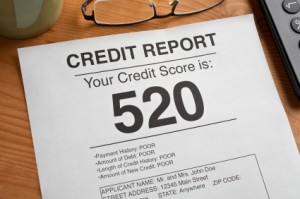
The term “Credit Score” refers to a FICO score which is a three digit number used to assess creditworthiness.  There are three major credit reporting agencies: Experian, Trans Union and Equifax.  Your credit score may be different at each credit reporting agency because the FICO score only considers data in your credit file from that agency.  If your score from the three credit reporting agencies is different, it’s probably because the information those agencies have on you differs.  FICO scores are used primarily in lending but also by employers and insurers.  So you ask, “What is a good credit score?” Generally scores are described as:

850 is the highest

770 or above = A+

700 to 769 = A

660 to 699 = B

600 to 639 = C

580 to 599 = D

579 and below =  F

300 is the lowest


Call now for a free consultation. Offices in Walnut Creek, Antioch and Hercules.

Law Office of Michael Primus


Filed Under: Blog, Credit

Debts Forgiven In Bankruptcy Are NOT Taxable

February 24, 2015 by Michael Primus

Tax form conceptThis time of year I am often asked whether debts forgiven in bankruptcy are taxable?  The question becomes far more serious if the person has received a form 1099 from a creditor reflecting cancellation of debt.    The tax laws make many forms of income taxable including “cancellation of debt income.”  However, the law also contains exceptions making some cancelled debts nontaxable.  Internal Revenue Code section 108 contains exceptions to the general rule that cancelled debt is taxable.  One of the exceptions is for debts forgiven in bankruptcy.

So how do you deal with that pesky 1099?  The answer is to include IRS form 982 with your tax return.  In fact, IRS Publication 4681 has a detailed discussion of cancelled debts including the exception for debts forgiven in bankruptcy.  Unfortunately many people preparing their own tax returns and even some tax professionals erroneously include cancelled debt as taxable income.  Claiming the exception is the taxpayer’s responsibility, and failure to claim the exception will result in the cancelled debt being taxable.  Don’t make this mistake!

At the Law Office of Michael Primus we have helped thousands of clients get out of debt, stop wage garnishments, and start fresh through bankruptcy.  If you live in Contra Costa County and have debt problems, contact us for a free in-office consultation.  We have offices in Walnut Creek, Antioch and Hercules.


Filed Under: Bankruptcy, Blog, Taxes

Medical Bills Can Be A Confusing Maze

January 9, 2015 by Michael Primus

Black vector mazeHave you ever said, “I thought that was covered by my insurance?”  Most of us have had the rude surprise of getting a medical bill we thought was going to be paid by insurance.  Most simple medical procedures are easily understood and with a few questions and perhaps a couple phone calls the patient will understand what part of the bill, if any, he will be responsible for.  When it comes to complex surgeries, however, most patients, myself included, have little or no idea what was needed or what was actually done.  Often after a hospital stay the patient will receive bills from the hospital, several physicians, various labs and potentially others.  Typically medical or dental bills need to be submitted several times to an insurance company before being paid, or worse not being paid.  The process of bill submission sounds simple but with hundreds of procedures and hundreds of insurance plans, “Medical Billing” has become a legitimate field of study and even a career option.  That’s crazy, but I digress.

During this period of submission and resubmission process, the healthcare provider typically will have been paid for a part of the work with some unpaid balance remaining due.   As time passes, the bill can go to collections where the consumer/patient’s credit is damaged.  Yes, your credit can be damaged while you wait to see if your insurance is going to pay the bill.  If that sounds unfair, it is!  According to the Consumer Financial Protection Bureau medical debt makes up 52 percent of all collections accounts on credit reports so the problem is widespread.  To reduce the risk of medical debts damaging your credit you need to review your medical bills and follow up to make sure the bills are being properly submitted to your insurance.  You should also get a copy of your credit reports using www.annualcreditreport.com to verify the accuracy of what is being reported.

At the Law Office of Michael Primus we have helped hundreds of clients get out of debt, stop wage garnishments, and start fresh through bankruptcy.  If you live in Contra Costa County and have debt problems, contact us for a free in-office consultation.  We have offices in Walnut Creek, Antioch and Hercules.


Filed Under: Bankruptcy, Blog

Does crime pay?

November 30, 2014 by Michael Primus

Red and Blue Lightbar of a Police CarFor many local governments, the answer is yes.  You’ve seen the signs in retail stores warning that you can be responsible for triple the amount if your check bounces.  Often the signs also include warnings that bouncing a check is a misdemeanor and that the retailer intends to prosecute.   Most of us have bounced a check at one time or another and then worried about what might happen.  If you get a letter that purports to be from the District Attorney threatening prosecution, it may not be what it looks like.

These days most district attorneys, including Contra Costa County, are short-staffed and have little or no resources to prosecute bounced checks.  Bounced checks are, at most, a low-level crime that does not merit jail time except in the most extreme cases.  Bounced checks are so common and the resources to prosecute so limited that many district attorneys have delegated the pursuit of bounced checks to private collection agencies.   This idea is easily accepted because it can also function as a moneymaker for local government.   What has developed are “diversion” programs whereby a person can avoid prosecution by paying for and completing a course on financial management.  These diversion programs are often run by private companies, but a portion of the fee charged for the course is paid to the local government.  In fact, Contra Costa County has a “Bad check diversion program” that allows the check writer to pay the check and complete a course to avoid prosecution.  The County’s website goes on to explain that the program is at no cost to the taxpayer.

In 2012 the New York Times published an article detailing a troubling trend where local district attorneys allow debt collectors to use the district attorney’s letterhead to threaten criminal prosecution when a debt involves an unpaid check.  Since that article, legal ethics opinions have decried the practice as unethical, yet it continues in many places.  This practice is especially problematic because of the number of scams where imposters claim to be law enforcement. Their  purpose is to extract money whether or not anything is actually owed.   Right here in Pleasanton, California, the Federal Trade Commission busted a scam where fake cops collected fake debts.  Anyone with questions should review the Federal Trade Commission’s Fake Debt Collectors scam alert.

At the Law Office of Michael Primus we have helped hundreds of clients get out of debt, stop wage garnishments, and start fresh through bankruptcy.  If you live in Contra Costa County and have debt problems, contact us for a free in-office consultation.  We have offices in Walnut Creek, Antioch and Hercules.

Filed Under: Blog

Mortgage Modification Troubles? You Have Rights!

November 12, 2014 by Michael Primus

Tired of the Mortgage Modification Run Around?  You Have Rights!  Attorney Michael Primus realizes the mortgage modification process scary and frustrating. In fact, a person may file chapter 13 bankruptcy  in Contra Costa County to stop a foreclosure even though he or she is in the middle of a loan modification.  It’s not uncommon for a person in the middle of a loan modification to be told very different things from one day to the next by their mortgage lender.  For example, one representative may say “don’t worry we’re not going to foreclose because you’re in a modification” and the next day another representative will say “We didn’t receive your application and so your loan was placed in foreclosure.”  Often, the foreclosure process is initiated while a modification is pending. This is called dual tracking and refers to the practice of running the foreclosure process at the same time as the loan modification process.  Note: foreclosure is the legal process used by a mortgage lender to take your home if your payments are delinquent.

We were told that the National Mortgage Settlement would help people keep their homes. Part of the National Settlement was to eliminate dual tracking so that people maximize their opportunity to save their home from foreclosure through the modification process. The National Mortgage Settlement states that the “Big Five” will cease all dual tracking as of October 3, 2012.  So who are the “Big Five” you ask?  Chase, Citifinancial, Wells Fargo, Bank of America and Ally/GMAC.  This is supposed to mean that while an active loan modification is taking place the mortgage company cannot proceed with foreclosure.  Sounds great, right? Of course who would violate the National Mortgage Settlement and take a chance of making the Attorney General mad? Good questions but apparently what seems to be clear cut may not be so clear.

I am still seeing mortgage companies claiming that modification paperwork was incomplete when received or never received at all.  This despite homeowners repeatly faxing, mailing and even Fed Ex-ing modification applications.  What does this mean? This means that the mortgage company can claim that there is no active loan modification and game over. The mortgage company will then be entitled to pursue the foreclosure without violating the National Mortgage Settlement.  So is all hope lost? No.

If you are attempting a loan modification, keep a record of your activities. The date you sent documentation, a list of the documentation sent and the address or fax of where you sent the documentation.  Keep a record of the calls, who you spoke with, the phone number, date and time as well as the conversation details.  If you get the run around or are accused of not sending the documentation you should file a complaint with the monitor of the National Mortgage Settlement.

What if your loan is not with one of the Big Five?  Consider your rights under the California Homeowners Bill of Rights which became effective January 1, 2013.

Call now for a free consultation regarding bankruptcy.  Offices in Walnut Creek, Antioch and Hercules.

Law Office of Michael Primus

 

Filed Under: Blog, Featured

  • « Previous Page
  • 1
  • …
  • 8
  • 9
  • 10
  • 11
  • 12
  • …
  • 15
  • Next Page »

From the Blog

Finally, consumers catch a break! California’s Delete Request and Opt-out Platform is live

March 4, 2026

Unemployment and Social Security overpayments are forgiven in bankruptcy

February 20, 2026

Chapter 7 Bankruptcy – Necessities of Life or Exemptions – Updated for 2025

September 12, 2025

If my wages get garnished, how much can they take?

May 29, 2025

Will I lose my job if I file for bankruptcy?

April 23, 2025

Blog Categories

  • Bankruptcy (40)
  • Blog (87)
  • Common Questions (7)
  • Credit (17)
  • Featured (6)
  • Marriage & Divorce (7)
  • Student loans (3)
  • Taxes (3)
Lawyer Michael Primus | Top Attorney Chapter 7

Bankruptcy, Not The End But A New Beginning.
We are a debt relief agency.
We help people file for bankruptcy.
We provide Flexible Payment Options.

Get Started with a Free 30-Min Consultation

Office Locations

Walnut Creek
2950 Buskirk Avenue
Suite 300
Walnut Creek, CA 94597

925-934-0500

Get Directions

Google Reviews

Yelp Reviews

Antioch
511 West 3rd Street

Antioch, CA 94509

925-706-9200

Get Directions

Google Reviews

Yelp Reviews

Hercules
500 Alfred Nobel Drive
Suite 135
Hercules, CA 94547

510-741-1800

Get Directions

Google Reviews

Yelp Reviews

  • Privacy Policy
  • Sitemap

Copyright © 1992–2026 · Handcrafted by Iron Leaf Media

Determining if bankruptcy is right for you requires specific guidance from an attorney because each situation is different.
The information here is general in nature and is not a substitute for an in office consultation with a lawyer.