
Law Offices of Michael J. Primus

Personal & Business Bankruptcy Attorney serving San Francisco Bay Area Since 1993

  • Home
  • Offices
    • Walnut Creek Office
    • Hercules Office
    • Antioch Office
  • Bankruptcy Basics
  • Resources
    • AVVO Legal Guides
    • Common Questions Video Series
    • Real People, Real Questions, Real Answers
    • Free Credit Report
  • Blog
    • Bankruptcy
    • Credit
    • Marriage & Divorce
    • Student loans
    • Taxes
  • Contact
  • Top Rated

Can I Find a Place to Rent After Bankruptcy?

June 29, 2015 by Michael Primus

Couple Standing By For Rent Sign Outside HomeWhether you rent or own, most people filing bankruptcy do not want to move.  In most bankruptcy cases  people keep paying their rent or house payment and are not expected to move.  Even so, one of the scariest things for people filing bankruptcy is the worry that in the future they will not be able to find a landlord to rent to them because of their credit.  The law gives a landlord discretion to accept or decline a potential tenant for almost any reason.  That said, most landlords have three goals in selecting a tenant:

1.  Must be able to pay the rent – Many landlords use a credit score as a gauge of a person’s ability to pay the rent but a credit score is not the only method.  Rental history and documented income can overcome a bad credit report with many landlords.

2.  Must take care of the property – Landlords want their property to be taken care of.  Landlords will quickly and quietly assess a person based on their appearance.  A person that cares for their personal appearance may be assumed to care for the place they live with the same attention to detail.  This sounds superficial, and it is, but landlords often make decisions with limited information.

3.  Must stay for some period of time – Landlords like people with established jobs, established families, and roots in the community.  People who, the landlord hopes, will move in and stay for years.  Landlords do not like vacancy.  In fact, this is the reason many landlords ask tenants to sign a 12-month lease prior to moving in.

If you’re looking for a place to rent within two years of filing bankruptcy, you should expect a few questions about your situation.  Some landlords may ask for a co-signer.  Ultimately most people find perseverance pays and they are able to find a place to rent.  Remember, landlords need you as much as you need them.  So if your credit is not good, you should plan to show a good rental history (hopefully it’s good) and documented income.  Dress well and be on time when meeting a prospective landlord.  Be ready to discuss any connections to the community and your willingness to sign a lease for a period of time.

At the Law Office of Michael Primus we have helped thousands of clients get out of debt, stop wage garnishments, and start fresh through bankruptcy.  If you live in Contra Costa, Alameda or Solano counties and have debt problems, contact us for a free in-office consultation.  We have offices in Walnut Creek, Antioch and Hercules.

Filed Under: Blog, Credit

Seniors and Debt

May 1, 2015 by Michael Primus

Concerned Senior CoupleFor many senior citizens in Contra Costa County, living on a fixed income can become unmanageable.  Unexpected medical bills, prescription drugs, and the never-ending increases in the cost of living can stretch a budget to the brink.  Hard choices slowly become the norm.  It’s a modern tragedy to hear that some seniors elect not to purchase prescription medicine in order to pay other debts.  Amidst the turmoil are questions with real answers and meaningful help.

What happens if I just stop paying my credit cards? 

Generally, credit card companies will wait about 30 days from when a payment was due before they send a follow up letter informing you that you’re delinquent.  As the bill gets further and further behind you will receive harsher, more demanding letters as well as phone calls.  Usually after several months the debt is sold to a collection agency and the calls and letters continue.  Eventually, the credit card company or collection agency can file a lawsuit.  The goal of a lawsuit is to give the credit card company the ability to put a lien against your house or garnish your wages or both.   Note: a judgment does not allow a credit card company to force the sale of your home.

If a bill collector calls what do I say?

Many honest people try to explain their situation when they receive a collection call.  If you try that, you’ll soon see that most debt collectors are not interested in your situation.  Typically, debt collectors are paid a percentage of what they collect from people, and for that reason they will limit the discussion to what you will pay and when.  After a few calls you’ll realize there is no point in talking to them, but the calls will keep coming.  The Fair Debt Collection Practices Act (FDCPA) and the California Civil Code create limits on what debt collectors can do.  Debt collectors are prohibited from calling before 8:00 am or after 9:00 pm.  The law also prohibits “harassment.”  Unfortunately the FDCPA and the Civil Code are routinely ignored by bill collectors.  The law gives you the right to sue a bill collector if your rights are being violated.  The debt collection industry relies on people being unable or unwilling to actually file suit against a bill collector.  The Federal Trade Commission has jurisdiction to enforce FDCPA but only deals with a small fraction of the known abuses.

If I die will my kids inherit my debts?

This is a very common misconception, and one that an unscrupulous debt collector may offer as fact.  Generally, a person’s assets are used to satisfy their debts before there is any inheritance.   In most cases, creditors are only allowed to seek payment from the deceased person’s assets.  In some circumstances a surviving spouse can take personal responsibility for all assets and debts of the deceased.

Can they take my Social Security?

Finally some good news.  Federal law protects Social Security from the reach of most non-governmental creditors.  That means credit cards, medical bills and collection agencies will not be able to take your Social Security even if they have filed a lawsuit and obtained a judgment.  Even better, the protection is automatic so you do not need to complete any forms or go to court.

Is Bankruptcy the solution?

Usually.  The bankruptcy laws are the laws society provides to allow a person to have most debts forgiven.  Bankruptcy can wipe out credit cards, medical bills, and collection agency bills.  After bankruptcy the calls, letters, and lawsuits all stop.  Bankruptcy does not forgive student loans, alimony, child support or crime.  Bankruptcy is a viable, long term solution for many people struggling with debts.

At the Law Office of Michael Primus we have helped thousands of clients get out of debt, stop wage garnishments, and start fresh through bankruptcy.  If you live in Contra Costa County and have debt problems, contact us for a free in-office consultation.  We have offices in Walnut Creek, Antioch and Hercules.
Filed Under: Bankruptcy, Blog

Credit Score Basics – How Is A Credit Score Determined?

April 24, 2015 by Michael Primus

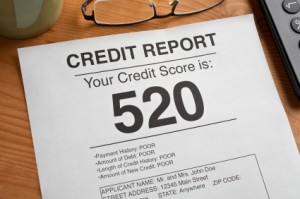
Michael Primus is a bankruptcy attorney in Contra Costa County.  A “Credit Score” is the term used to refer to a FICO (Fair Isaac Corp.) score which is a three digit number used to determine creditworthiness.  The credit score is derived using a complex formula but can be summarized as follows:

35% – Payment History

30% – Amount of Debt

15% – Credit History

10% – Types of Debt

10% – New Credit


Call now for a free in office consultation.  Offices in Walnut Creek, Antioch and Hercules.

Law Office of Michael Primus

Filed Under: Blog, Credit

Credit Score Basics – What is a Good Credit Score?

April 11, 2015 by Michael Primus

The term “Credit Score” refers to a FICO score which is a three digit number used to assess creditworthiness.  There are three major credit reporting agencies: Experian, Trans Union and Equifax.  Your credit score may be different at each credit reporting agency because the FICO score only considers data in your credit file from that agency.  If your score from the three credit reporting agencies is different, it’s probably because the information those agencies have on you differs.  FICO scores are used primarily in lending but also by employers and insurers.  So you ask, “What is a good credit score?” Generally scores are described as:

850 is the highest

770 or above = A+

700 to 769 = A

660 to 699 = B

600 to 639 = C

580 to 599 = D

579 and below =  F

300 is the lowest


Call now for a free consultation. Offices in Walnut Creek, Antioch and Hercules.

Law Office of Michael Primus


Filed Under: Blog, Credit

Debts Forgiven In Bankruptcy Are NOT Taxable

February 24, 2015 by Michael Primus

Tax form conceptThis time of year I am often asked whether debts forgiven in bankruptcy are taxable?  The question becomes far more serious if the person has received a form 1099 from a creditor reflecting cancellation of debt.    The tax laws make many forms of income taxable including “cancellation of debt income.”  However, the law also contains exceptions making some cancelled debts nontaxable.  Internal Revenue Code section 108 contains exceptions to the general rule that cancelled debt is taxable.  One of the exceptions is for debts forgiven in bankruptcy.

So how do you deal with that pesky 1099?  The answer is to include IRS form 982 with your tax return.  In fact, IRS Publication 4681 has a detailed discussion of cancelled debts including the exception for debts forgiven in bankruptcy.  Unfortunately many people preparing their own tax returns and even some tax professionals erroneously include cancelled debt as taxable income.  Claiming the exception is the taxpayer’s responsibility, and failure to claim the exception will result in the cancelled debt being taxable.  Don’t make this mistake!

At the Law Office of Michael Primus we have helped thousands of clients get out of debt, stop wage garnishments, and start fresh through bankruptcy.  If you live in Contra Costa County and have debt problems, contact us for a free in-office consultation.  We have offices in Walnut Creek, Antioch and Hercules.

 

Filed Under: Bankruptcy, Blog, Taxes

Medical Bills Can Be A Confusing Maze

January 9, 2015 by Michael Primus

Black vector mazeHave you ever said, “I thought that was covered by my insurance?”  Most of us have had the rude surprise of getting a medical bill we thought was going to be paid by insurance.  Most simple medical procedures are easily understood and with a few questions and perhaps a couple phone calls the patient will understand what part of the bill, if any, he will be responsible for.  When it comes to complex surgeries, however, most patients, myself included, have little or no idea what was needed or what was actually done.  Often after a hospital stay the patient will receive bills from the hospital, several physicians, various labs and potentially others.  Typically medical or dental bills need to be submitted several times to an insurance company before being paid, or worse not being paid.  The process of bill submission sounds simple but with hundreds of procedures and hundreds of insurance plans, “Medical Billing” has become a legitimate field of study and even a career option.  That’s crazy, but I digress.

During this period of submission and resubmission process, the healthcare provider typically will have been paid for a part of the work with some unpaid balance remaining due.   As time passes, the bill can go to collections where the consumer/patient’s credit is damaged.  Yes, your credit can be damaged while you wait to see if your insurance is going to pay the bill.  If that sounds unfair, it is!  According to the Consumer Financial Protection Bureau medical debt makes up 52 percent of all collections accounts on credit reports so the problem is widespread.  To reduce the risk of medical debts damaging your credit you need to review your medical bills and follow up to make sure the bills are being properly submitted to your insurance.  You should also get a copy of your credit reports using www.annualcreditreport.com to verify the accuracy of what is being reported.

At the Law Office of Michael Primus we have helped hundreds of clients get out of debt, stop wage garnishments, and start fresh through bankruptcy.  If you live in Contra Costa County and have debt problems, contact us for a free in-office consultation.  We have offices in Walnut Creek, Antioch and Hercules.

 

Filed Under: Bankruptcy, Blog

  • « Previous Page
  • 1
  • …
  • 3
  • 4
  • 5
  • 6
  • 7
  • 8
  • Next Page »

From the Blog

Finally, consumers catch a break! California’s Delete Request and Opt-out Platform is live

March 4, 2026

Unemployment and Social Security overpayments are forgiven in bankruptcy

February 20, 2026

Chapter 7 Bankruptcy – Necessities of Life or Exemptions – Updated for 2025

September 12, 2025

If my wages get garnished, how much can they take?

May 29, 2025

Will I lose my job if I file for bankruptcy?

April 23, 2025

Blog Categories

  • Bankruptcy (40)
  • Blog (87)
  • Common Questions (7)
  • Credit (17)
  • Featured (6)
  • Marriage & Divorce (7)
  • Student loans (3)
  • Taxes (3)
Lawyer Michael Primus | Top Attorney Chapter 7

Bankruptcy, Not The End But A New Beginning.
We are a debt relief agency.
We help people file for bankruptcy.
We provide Flexible Payment Options.

Get Started with a Free 30-Min Consultation

Office Locations

Walnut Creek
2950 Buskirk Avenue
Suite 300
Walnut Creek, CA 94597

925-934-0500

Get Directions

Google Reviews

Yelp Reviews

Antioch
511 West 3rd Street

Antioch, CA 94509

925-706-9200

Get Directions

Google Reviews

Yelp Reviews

Hercules
500 Alfred Nobel Drive
Suite 135
Hercules, CA 94547

510-741-1800

Get Directions

Google Reviews

Yelp Reviews

  • Privacy Policy
  • Sitemap

Copyright © 1992–2026 · Handcrafted by Iron Leaf Media

Determining if bankruptcy is right for you requires specific guidance from an attorney because each situation is different.
The information here is general in nature and is not a substitute for an in office consultation with a lawyer.